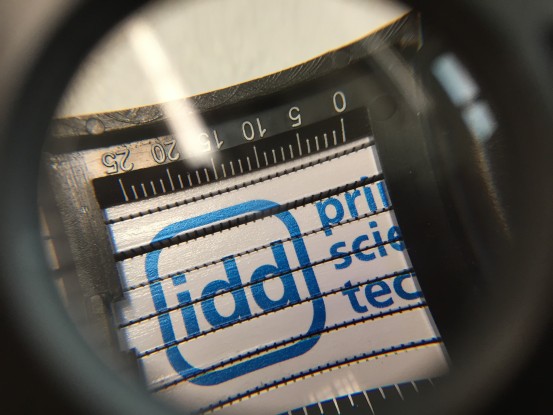
Zwei-Photonen-Stereolithographiedruck von Glass für zellbiologische Anwendungen und Mikrofluidik
02.06.2026
Entwicklung eines additiv gefertigten Krafteinleitungs- und Polstersystems für ein Hüftexoskelett
18.05.2026
Masterthesis
Exoskelette entlasten den Körper, scheitern aber oft an unbequemen Schnittstellen zum Menschen. In dieser Arbeit wird ein additiv gefertigtes Hüftpolster für ein Exoskelett entwickelt: ein steifer Krafteinleitungsrahmen mit austauschbarem, weichem TPU-Einsatz. Ziel ist es, Druck besser zu verteilen, den Tragekomfort zu erhöhen und das System prototypisch umzusetzen und zu bewerten.
Betreuer/in: Jonas Dietz, M.Sc.
Development of a printing process for green 3D bioprinting
08.05.2026
Masterthesis
Pflanzenzellen werden biotechnologisch zur Herstellung wichtiger Wirkstoffe wie Taxol genutzt. In dieser Arbeit soll der grüne 3D-Biodruck im Extrusionsverfahren etabliert werden, um Pflanzenzellen gezielt in dreidimensionale Strukturen für eine effizientere Wirkstoffproduktion zu überführen. Dabei werden geeignete Geometrien, Druckparameter und Strategien zur Aushärtung der Alginat-Tinte untersucht sowie der Einfluss des Prozesses auf die Pflanzenzellen mittels Fluoreszenzfärbungen analysiert.
Betreuer/in: Kira Schnellbächer, M.Sc.
Herstellung hybrider Hydrogele auf Kollagen-Basis
Fabrication of hybrid collagen-based hydrogels
17.04.2026
Masterthesis, Bachelorthesis
Hydrogele werden aufgrund ihrer strukturellen Ähnlichkeit zur nativen Extrazellulärmatrix häufig zur Generierung von 3D-Gewebemodellen eingesetzt. Traditionelle Hydrogele sind jedoch meist statisch vernetzt und daher unflexibel – im Gegensatz zu natürlichem Gewebe.
Betreuer/innen: Leonie Maria Holderbach, M.Sc., Philipp Richthof, B.Sc.
Experiments on the International Space Station (ISS)
From Ground to Orbit: Preflight Validation and Osteogenic Differentiation Studies of hMSC and Monocytes Under Microgravity Conditions
03.03.2026
Masterthesis, Forschungsseminar
Microgravity profoundly disrupts human physiology, driving progressive muscle atrophy and skeletal demineralization through altered mechanical loading of the musculoskeletal and hematopoietic systems.
This thesis examines how these mechanical changes regulate bone progenitor cell differentiation, encompassing the validation and optimization of osteogenic protocols for human mesenchymal stem cells (MSCs) and monocytes, alongside quantitative analysis of osteogenic marker gene expression.
The project establishes the experimental foundation for studies conducted under real microgravity conditions aboard the International Space Station (ISS).You will take part in the experimental campaign, including a three-week research stay during the launch phase at the Kennedy Space Center in Cape Canaveral, Florida (Q1 2027).
Qualifications: Proficiency in sterile cell culture techniques, availability during this period, and a conscientious working style
Beneficial: Experience with bioanalytical methods, including qPCR and staining assays, space enthusiast
Betreuer/innen: David Sipos, M.Sc., Sebastian Scholpp, M.Sc.